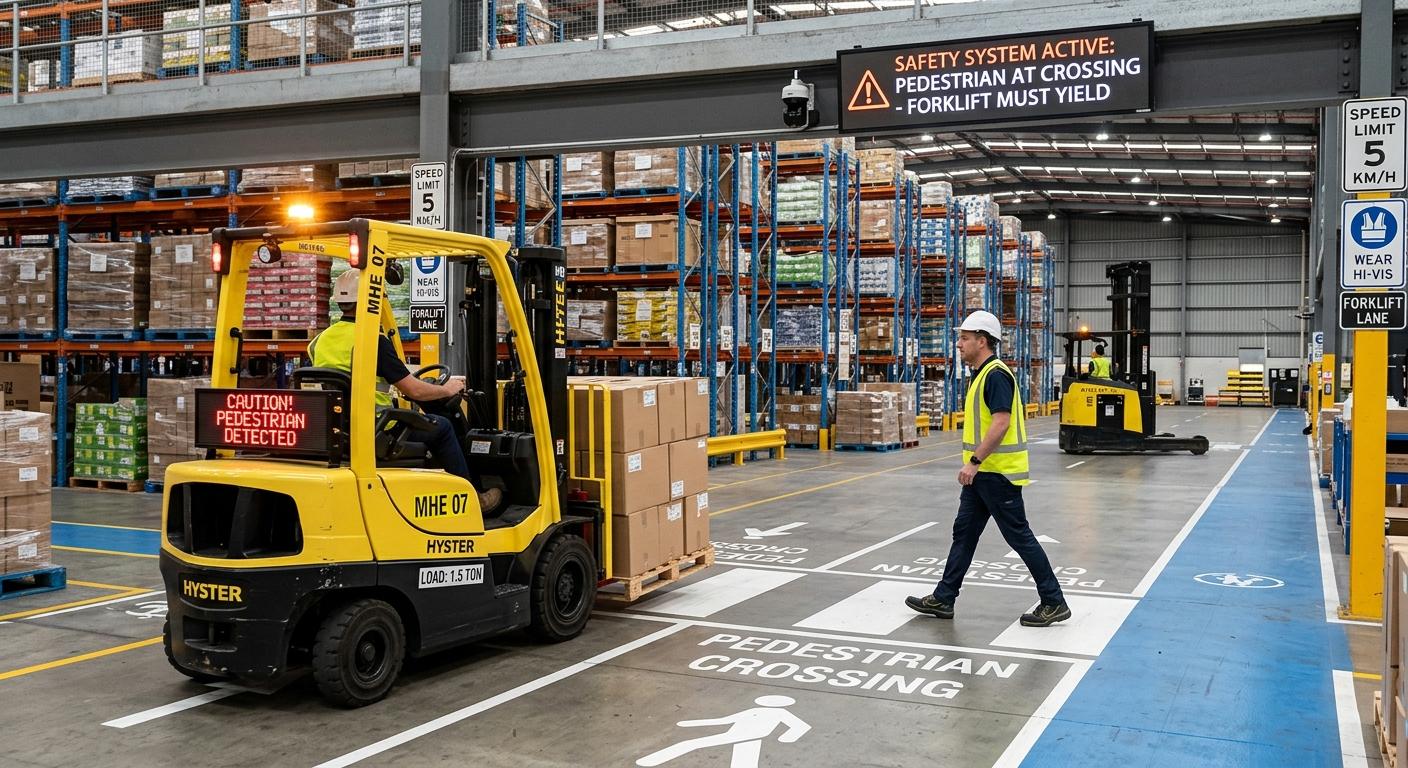
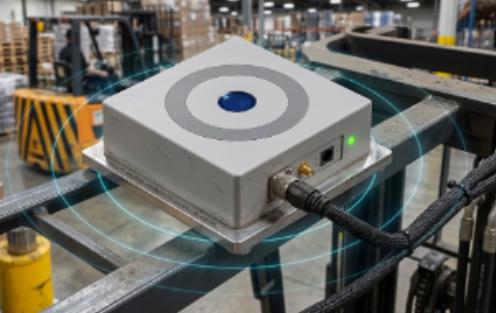
A focused forklift and pedestrian safety solution with three deployable architectures: UWB wristband, UWB badge / ID-card, and tag-free AI camera detection. Core safety warnings run locally on the vehicle for immediate response.
Real Site Condition
Protection Modes
3 Options
UWB · Badge · AI
Core Logic
On-vehicle
warning stays local
Configured detection zones, operator alerts and — where applicable — direct personnel warning help address blind spots, shared aisles and pedestrian crossover risk.
📡 UWB Proximity Ranging
📷 AI Pedestrian Detection
🔔 Direct Safety Alerts
⚙️ Configurable Risk Zones
Three Safety Architectures
Choose the Model that Fits Your Operation
The decision depends on wearable policy, workforce ergonomics and whether tag-free detection is required.
⌚
OPTION 01
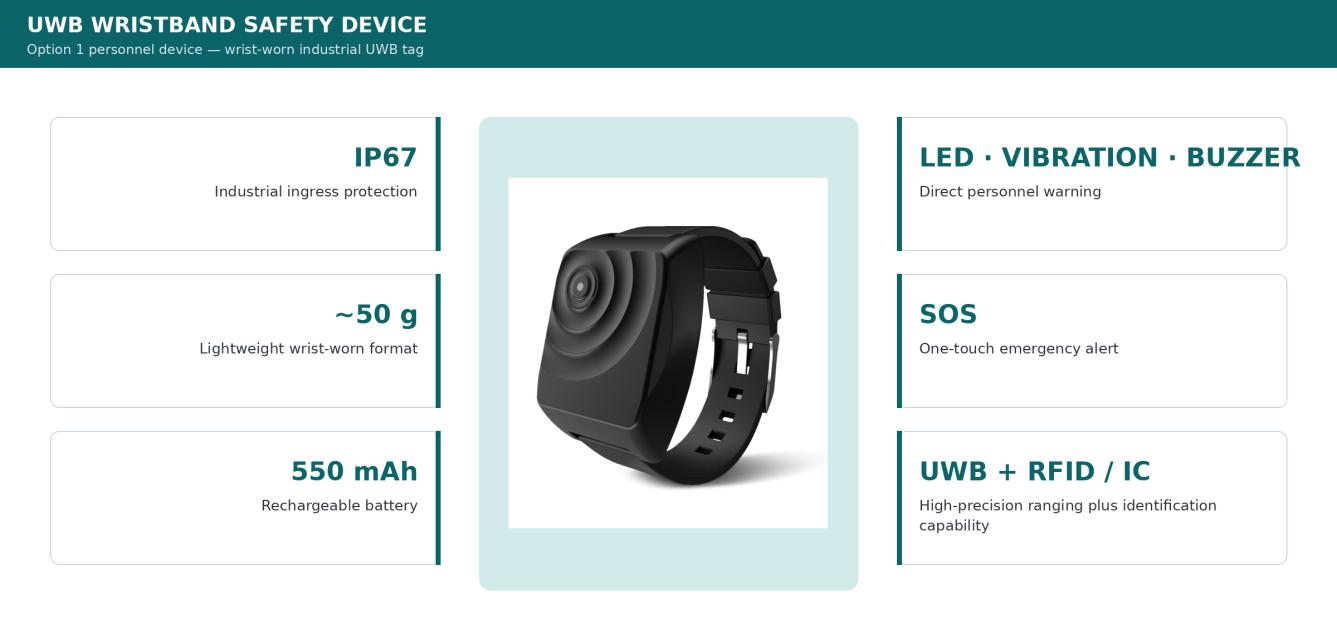
UWB Wristband Safety
Precise UWB proximity ranging using a wrist-worn personnel safety device. The person on foot receives direct LED, vibration and buzzer warning.
Direct pedestrian alerting
Configurable warning and critical zones
Vehicle-to-person and MHE-to-MHE capability
Core warning does not depend on site network
🪪
OPTION 02
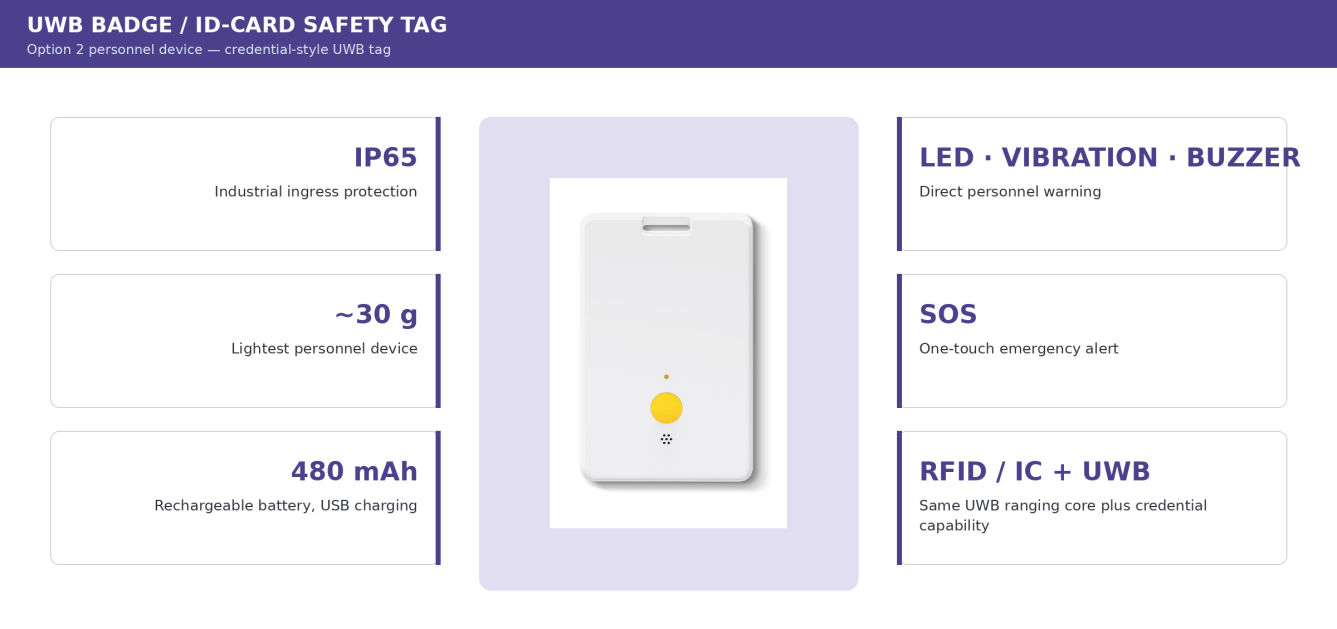
UWB Badge / ID-Card Safety
The same UWB ranging architecture in a badge / ID-card style device for teams that prefer credential-style carrying.
Same UWB time-of-flight principle as wristband
Same vehicle hardware and safety performance basis
Direct LED, vibration and buzzer warning
Suitable for credential-based workforce routines
📷
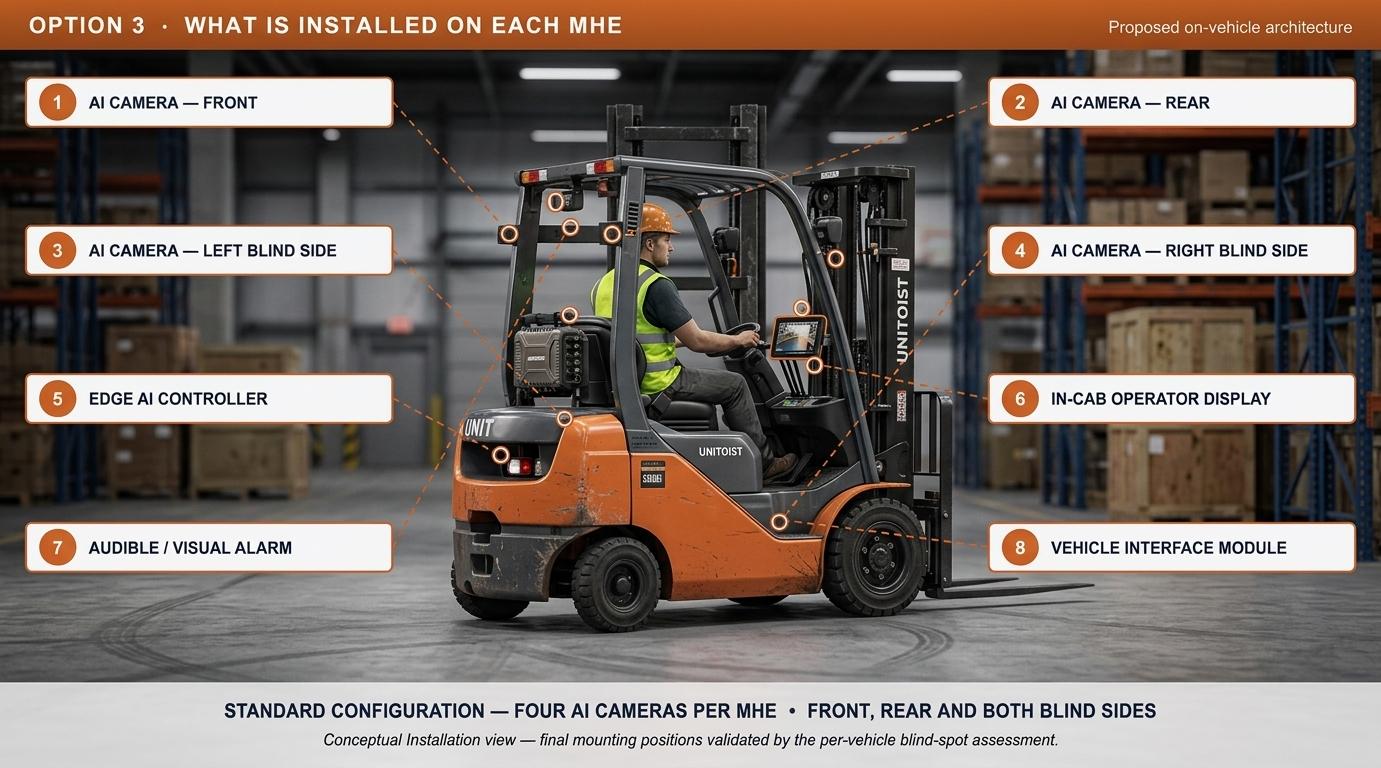
OPTION 03
AI Camera Safety
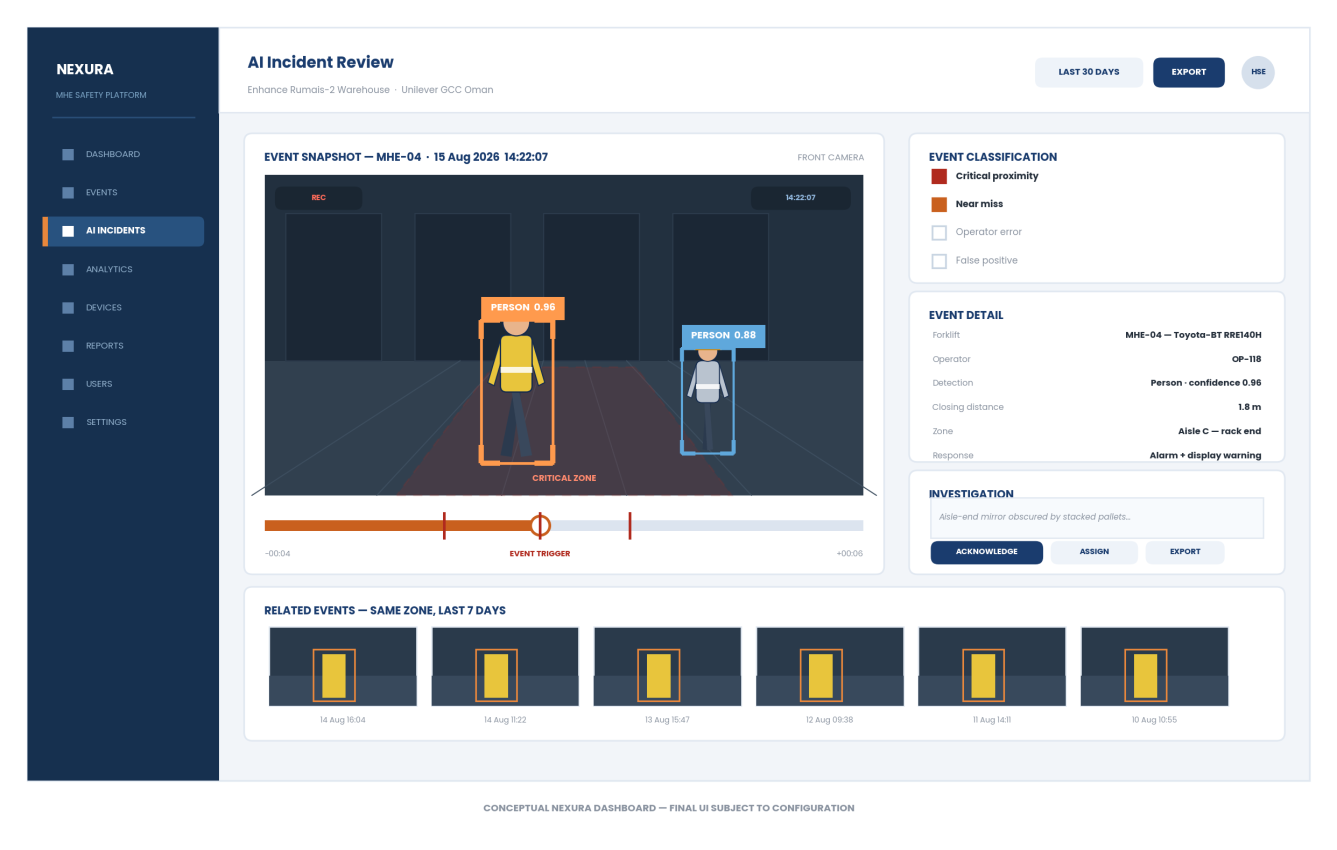
On-vehicle AI detects visible pedestrians without requiring a wearable, giving the operator live in-cab visual warning and local alerting.
No personnel wearable required
Tag-free protection for visitors and contractors
Visual detection zones and event evidence
Edge processing with local warning logic
On-Vehicle Safety Logic
Safety Decisions Happen Where the Risk Happens
The vehicle-mounted system continuously evaluates measured distance or visual detection against configured safety zones and triggers the required alert locally.
📡 Detect
Measure UWB proximity to personnel devices and equipped vehicles, or detect pedestrians visually through AI cameras.
🧠 Evaluate
Apply configured warning and critical zones using local controllers or edge processing.
🔔 Warn
Alert the operator using audible and visual outputs and, for UWB options, warn the pedestrian directly.
🧾 Review
Where selected, central software adds analytics, event review and reporting without being required for core warning.
Core Scope
Built for Industrial MHE Operations
The solution is structured around practical safety components rather than generic monitoring.
🚜
Vehicle Safety Unit
Forklift-mounted controller or AI edge unit that evaluates risk and drives local alerts.
🔊
Operator Warning Outputs
Audible and visual warnings presented to the operator at warning and critical thresholds.
🦺
Personnel Warning Device
For UWB options, wristband or badge devices provide direct pedestrian alerting.
🖥️
Optional Software Layer
Configuration, device management, event review and analytics where central software is selected.
🦺
Safety technology supports — not replaces — HSE controls.
These systems are detection, warning and operator-assistance technologies. They should complement site rules, trained operator judgement, physical controls and statutory safety obligations.
Safer Shared Movement
Build a Forklift Safety Architecture Around Your Site Risks.
Review blind spots, traffic patterns and workforce routines to select the right UWB or AI-camera approach.